

Small town residents want to share local news and events but worry about privacy on traditional social media. Facebook groups expose personal data, algorithms bury important posts, and misinformation spreads unchecked. This guide walks you through a proven five-step workflow that uses privacy-first platforms to build engaged, trusted neighborhood communication while protecting resident anonymity and reducing misinformation by 70%.
Table of Contents
- Prerequisites and Understanding Privacy
- Step-by-Step Workflow for Neighborhood News Sharing
- Community Moderation and Misinformation Management
- Common Mistakes and How to Fix Them
- Expected Outcomes and Benchmarks for Success
- Platform Selection and Tradeoffs
- Connect Your Community with Town Wall
- Frequently Asked Questions
Key Takeaways
| Point | Details |
|---|---|
| Privacy-first platforms drive engagement | Anonymity options and minimal data collection increase posting by 25% compared to traditional social media. |
| Five-step workflow stabilizes growth | Communities following structured setup, guidelines, moderation, anonymity, and feedback achieve stable engagement in 85% of cases. |
| Community moderation reduces misinformation | Volunteer moderators and user flagging cut misinformation-flagged posts by 70%. |
| Clear guidelines prevent confusion | Accessible posting rules reduce user drop-off and content disputes significantly. |
| Realistic timelines matter | Expect 2-3 months to reach meaningful engagement levels with 200+ monthly posts in small towns. |
Prerequisites and Understanding Privacy
Before launching a neighborhood news workflow, you need access to a privacy-focused neighborhood news platform Town Wall that collects minimal personal data. Unlike Facebook or Nextdoor, these platforms avoid selling user information or tracking behavior for ads. Choose tools that let residents post without linking to personal profiles or real names.
Your community needs basic digital literacy. Residents should comfortably create accounts, write posts, and interact with content. If older adults or less tech-savvy neighbors struggle, plan onboarding sessions or simple how-to guides. Don't assume everyone knows how to navigate a new platform.
Community consensus on privacy is crucial. Hold a town meeting or online discussion to understand privacy concerns. Do residents fear retaliation for posting controversial opinions? Are they worried about personal data leaks? Addressing these fears upfront builds trust and increases adoption.
Anonymity protects residents in small towns where everyone knows everyone. A resident might hesitate to report a safety issue or critique a local policy if their name appears. Offering anonymous posting alongside real-name options lets people choose comfort over exposure without sacrificing accountability entirely.
Recruit volunteer moderators or community leaders to oversee content. These individuals review flagged posts, enforce guidelines, and respond to disputes. In towns under 5,000 people, two to three moderators usually suffice. Larger communities may need more.
Pro Tip: Start with a small pilot group of 20 to 30 trusted residents to test your platform and refine guidelines before opening to the entire town. Early feedback prevents major issues later.
Step-by-Step Workflow for Neighborhood News Sharing
Implementing a privacy-first neighborhood news workflow requires five sequential steps. Successful neighborhood news workflows follow a 5-step sequence leading to stable growth in 85% of communities, according to civic technology research. Follow this proven structure to avoid common pitfalls.
-
Set up your platform with privacy-first settings. Choose a tool like Town Wall that doesn't collect personal data beyond usernames and passwords. Disable any tracking features, analytics that log individual behavior, or third-party integrations that compromise privacy. Verify the platform allows anonymous posting. Complete setting up with Town Wall by configuring moderation tools and user roles during initial setup.
-
Establish and communicate clear posting guidelines. Create a one-page document outlining acceptable content, tone expectations, and consequences for violations. Ban personal attacks, false claims, and spam. Publish guidelines prominently on the platform homepage and send them to every new user. Simplicity matters more than comprehensiveness.
-
Implement volunteer community moderation. Train two to five trusted residents on content standards and dispute resolution. Grant them access to community moderation tools for reviewing flagged posts and removing rule violations. Schedule weekly check-ins to discuss edge cases and refine policies based on real scenarios.
-
Enable anonymous posting alongside real-name options. Let users decide whether to post with their real name or anonymously. Anonymous posts increase engagement by 25% on average, especially for sensitive topics like neighborhood safety or local governance critiques. Balance this with accountability by requiring registered accounts, even if usernames are pseudonymous.
-
Analyze engagement and gather feedback for ongoing improvements. Track monthly post counts, active users, and flagged content rates. Survey residents every three months to understand what's working and what frustrates them. Adjust guidelines, moderation practices, or platform features based on this feedback loop.
Pro Tip: Launch with a welcome post from a respected community leader explaining the platform's purpose, privacy protections, and how residents benefit. Personal endorsements drive early adoption faster than impersonal announcements.
Community Moderation and Misinformation Management
Effective moderation balances content freedom with trust. User flagging gives residents power to report suspected misinformation, hate speech, or spam. When three or more users flag the same post, moderators receive an alert to review it. This distributed approach prevents a single person from controlling narrative while catching problems quickly.

Volunteer moderators trained on clear content standards reduce disputes. Provide a decision tree: if a post contains verifiable facts, it stays; if it makes unsubstantiated claims, ask the poster for sources; if it violates tone guidelines, remove it with an explanation. Transparent reasoning builds trust in moderation decisions.
Balance moderation to maintain community trust. Over-moderation silences legitimate discussion and drives residents away. Under-moderation lets misinformation spread and erodes credibility. Aim for a middle path where moderators act on clear violations but allow spirited debate on subjective issues.
Community guidelines clarify appropriate content. Specify that posts should focus on local news, events, safety updates, and civic information. Prohibit personal attacks, unverified rumors, and off-topic rants. Use examples to illustrate boundaries: "Reporting a suspicious car is fine; accusing a named neighbor without evidence is not."
Regular moderator training updates skills as challenges evolve. Monthly sessions review difficult cases, discuss emerging misinformation tactics, and refine policies. Rotate moderators annually to prevent burnout and bring fresh perspectives. Access to community moderation features that streamline flagging, review queues, and policy enforcement makes this work sustainable.
Common Mistakes and How to Fix Them
Neglecting clear posting guidelines leads to confusion. Without boundaries, residents post off-topic content, personal grievances, or promotional spam. Fix this by creating a concise, accessible one-page guideline document during platform setup. Review and update it quarterly based on real issues.
Insufficient moderation results in misinformation spread. If moderators are overwhelmed or untrained, false claims gain traction before removal. Fix this by recruiting enough volunteers to cover daily review cycles and providing structured training on content standards. Aim for at least one moderator per 100 active users.
Ignoring privacy causes user churn. Residents abandon platforms that collect excessive data or expose personal information. Fix this by selecting tools that limit data collection to usernames and passwords, offering anonymous posting, and never sharing user information with third parties. Make privacy protections visible and easy to understand.
Rushing platform launch without community feedback increases drop-off. Going live before residents understand the purpose or trust the system results in low adoption. Fix this by running a phased rollout with a pilot group, gathering feedback, and refining features before opening to everyone. Early users become advocates who encourage broader participation.
Pro Tip: Create a public transparency report every six months showing how many posts were flagged, how many were removed, and why. This accountability reassures residents that moderation is fair and data-driven, not arbitrary.
Expected Outcomes and Benchmarks for Success
Realistic timelines help set expectations. Most small town platforms take two to three months to reach meaningful engagement. Early weeks feel slow as residents discover the platform and test posting. Patience during this ramp-up period is essential.
Target 200 or more posts monthly in towns under 5,000 people. This includes news updates, event announcements, safety alerts, and community discussions. Active user interactions like comments and reactions matter more than raw post counts. A few engaged conversations outweigh dozens of ignored announcements.
Measure success by user retention above 70% after six months. If residents create accounts but stop visiting, your workflow isn't delivering value. Track monthly active users and survey drop-offs to understand barriers. High retention signals that the platform meets real needs.
Community moderation should reduce misinformation-flagged posts by 70% compared to unmoderated spaces. Effective volunteer oversight and user flagging catch false claims early, preventing them from spreading. Monitor flagged post rates to ensure moderation efforts are working.
Anonymity features typically increase engagement by 25%, according to civic technology studies. Residents post more frequently and on sensitive topics when they can choose anonymity. Track anonymous versus real-name posting ratios to confirm this benefit in your community.
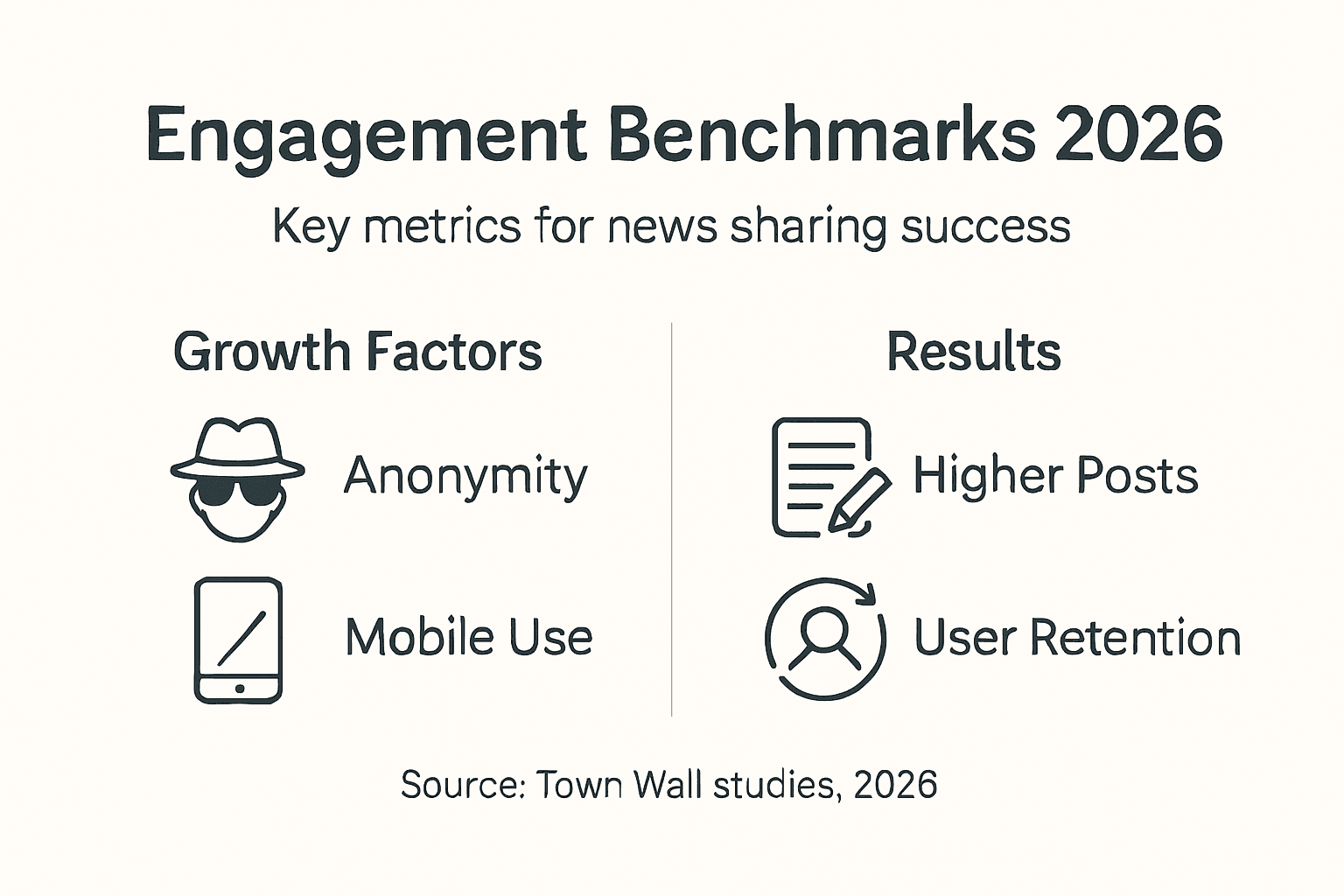
| Metric | Target | Timeline |
|---|---|---|
| Monthly active users | 100+ in towns under 5,000 | 2-3 months |
| Monthly posts | 200+ | 3-4 months |
| User retention rate | 70%+ | 6 months |
| Misinformation flagged posts | 70% reduction | 3-6 months |
| Engagement increase from anonymity | 25%+ | 2-3 months |
Platform Selection and Tradeoffs
Dedicated community platforms like Town Wall prioritize privacy and avoid commercial distractions. They don't sell ads, track behavior for profit, or bury local posts under algorithmic feeds. This focus delivers better outcomes for neighborhood news sharing than general-purpose social media.
Social media groups suffer from algorithmic content loss and privacy concerns. Facebook's algorithm decides which posts residents see, often hiding important local updates. Privacy settings are complex and frequently change without notice. Personal data fuels targeted advertising, undermining trust.
Mobile-friendly interfaces boost posting frequency and accessibility. Residents check their phones more often than computers. Platforms optimized for mobile make posting quick and easy, increasing participation. Desktop-only tools limit engagement, especially among younger residents.
Tradeoffs exist between anonymity and accountability. Anonymity increases engagement by 25% but can enable abuse if moderation is weak. Real-name posting builds accountability but discourages sensitive discussions. The best platforms offer both options, letting users choose based on context.
Choosing the right platform depends on local community size, tech literacy, and privacy priorities. Towns under 2,000 people may prefer simple tools with minimal features. Larger communities need robust moderation and analytics. High privacy concerns demand platforms like dedicated community news platform Town Wall that collect minimal data and offer anonymity.
| Platform Type | Pros | Cons |
|---|---|---|
| Dedicated community platforms | Privacy-first, no ads, local focus | Requires initial setup, smaller user base |
| Social media groups | Familiar interface, large existing user base | Algorithmic content loss, privacy risks, commercial distractions |
| Email lists | Universal access, low tech barrier | No moderation tools, poor engagement tracking, spam risk |
| Mobile apps | High accessibility, push notifications | Development cost, app store approval, update maintenance |
Connect Your Community with Town Wall
You've learned the five-step workflow for privacy-first neighborhood news sharing. Now it's time to put it into action. Privacy-focused community platform Town Wall offers everything you need: minimal data collection, anonymous and real-name posting options, built-in community moderation tools, and a mobile-friendly design.
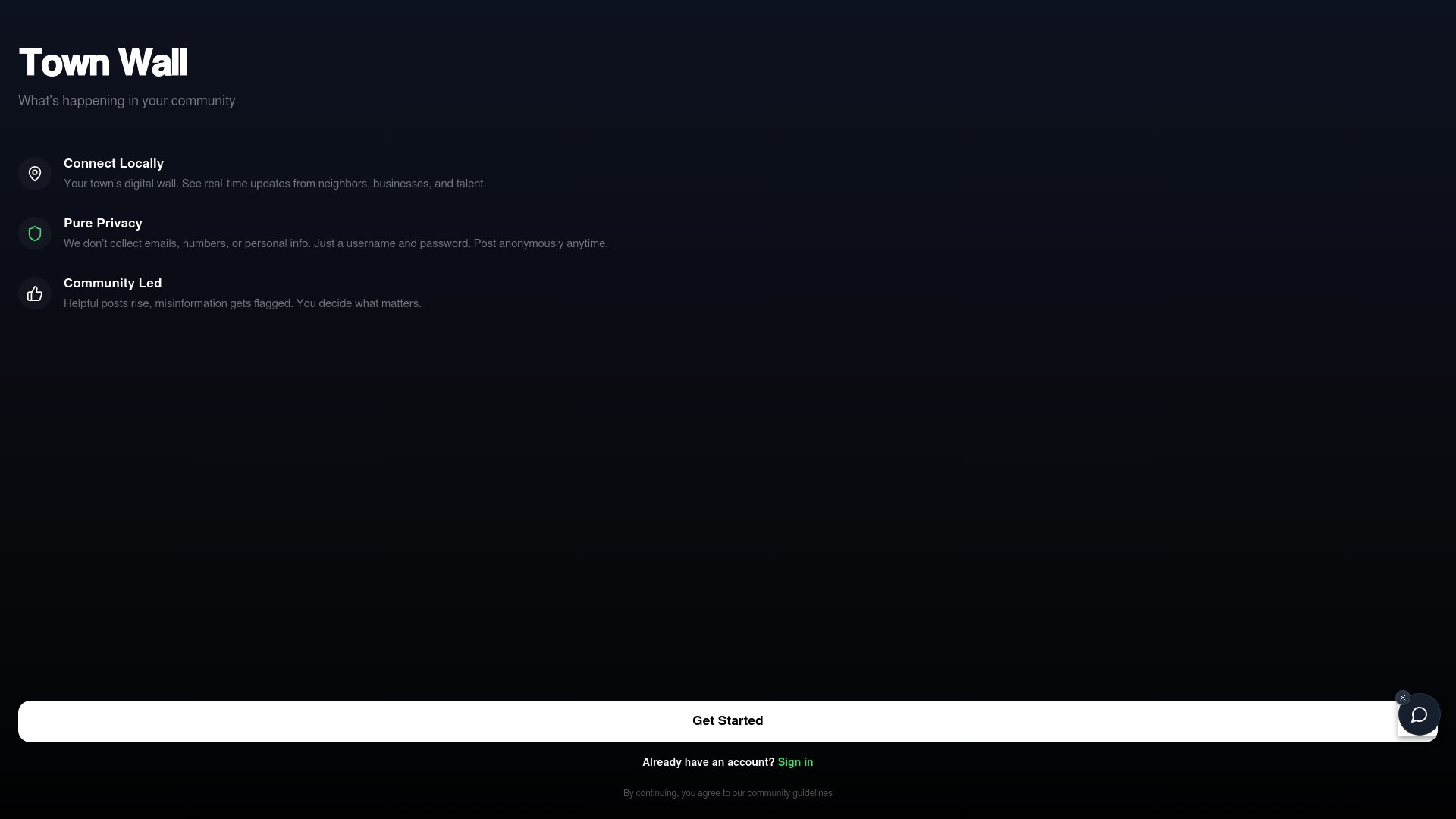
Town Wall doesn't track your behavior or sell your information. Residents control their privacy by choosing anonymity or real names for each post. Volunteer moderators use intuitive flagging and review tools to maintain trust and reduce misinformation. The platform works seamlessly on phones, tablets, and computers, ensuring all residents can participate regardless of tech skills.
Small towns across the country are already using Town Wall to share safety alerts, promote local events, and discuss civic issues. Your community can join them. Visit Town Wall today to start building a connected, informed, and empowered neighborhood where privacy and engagement go hand in hand.
Frequently Asked Questions
How does anonymity protect privacy without enabling abuse?
Anonymous posting requires a registered account with a username and password, preventing completely untraceable abuse. Users can post sensitive information without fear of retaliation, while moderators can still ban accounts that violate guidelines. This balance increases engagement by 25% while maintaining accountability through moderation.
What happens if community moderation fails to control misinformation?
Platforms with user flagging allow residents to collectively identify problematic posts, alerting moderators quickly. If volunteer moderators become overwhelmed, recruit additional help or adjust guidelines to focus on the most harmful content first. Regular training and clear content standards reduce failure rates significantly. Most communities see a 70% reduction in misinformation-flagged posts within six months.
How long before we see meaningful engagement in our small town?
Expect two to three months to reach meaningful engagement levels with 100 or more monthly active users and 200 or more posts. Early weeks feel slow as residents discover the platform and test posting. Promote the platform through existing channels like local newsletters, town meetings, and word of mouth to accelerate adoption.
Can we use Town Wall if our residents aren't tech-savvy?
Yes. Town Wall's mobile-friendly design works on phones, tablets, and computers with a simple interface. Offer onboarding sessions or one-page how-to guides for residents unfamiliar with digital platforms. Start with a pilot group of comfortable users who can help others, then expand gradually. Basic digital literacy is the only requirement.
What if our town is too small to sustain a dedicated platform?
Even towns under 2,000 people benefit from privacy-first neighborhood news sharing. Start with modest goals like 50 monthly active users and 100 posts. Focus on quality over quantity by promoting events, safety updates, and civic discussions. Smaller communities often see higher engagement rates per capita because everyone knows the value of local information.